
When Leadership Is Answered, Not Chosen
One year can change a lot in higher education leadership. Sometimes leadership is not planned. It is answered when the moment calls for it.
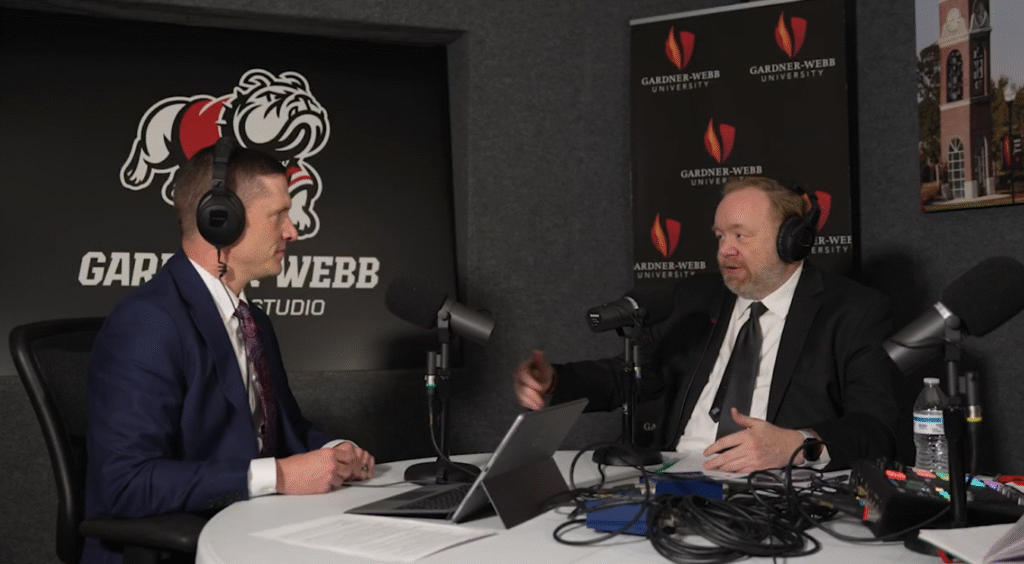
In the newest episode of The Bulldog Mindset, I sit down with President Nate Evans, recently named the 14th President of Gardner-Webb University after serving this past year in the interim role during a season of real transition. The timing matters. This was not a routine leadership handoff. It happened during a period of institutional turnover, external pressure, and growing public criticism of higher education itself.
The presidency changed hands. At the same time, several vice president roles also turned over, including Academic Affairs, Finance, Enrollment, Athletics, Advancement, and Communications and Marketing. That level of cabinet transition is not theoretical. It affects decisions, pace, morale, and trust. It tests whether an institution is anchored in mission or overly dependent on personalities.
This conversation gave listeners a look at how leadership actually functions when conditions are not settled and when easy answers are not available.
Leading a University in a Tough Moment for Higher Education
Higher education is under scrutiny right now from multiple directions. Demographic pressure. Enrollment stress. Questions about value. Political tension. Public skepticism. Financial fragility at many institutions. Shorter presidential tenures. Louder criticism. Faster news cycles.
Presidents today do not inherit calm systems. They inherit moving targets.
One thing that came through clearly in our discussion is that President Evans does not pretend that these pressures are not real. He talks directly about enrollment cliffs, operational discipline, student experience, and the need to rethink assumptions rather than repeat old patterns. He frames the challenge in practical terms. Observe. Orient. Decide. Act. Then evaluate and adjust.
That mindset is less about slogans and more about posture. Do not panic. Do not freeze. Do not drift. Pay attention and move with intention.
Leadership Without a Script
Some leaders map their careers toward the presidency. Others arrive there by accumulation of roles. In this case, the path was neither linear nor planned. President Evans speaks openly about that. Advancement work. Military background. Operational exposure. Cabinet experience. Then the call to step in as interim president when the institution needed stability.
There is something worth noticing here. He does not describe the presidency as a personal achievement story. He describes it as stewardship and calling. That shapes how decisions are framed and how responsibility is carried.
He also describes the early days in very concrete terms. The speed. The weight. The reality that major decisions arrive immediately and do not wait for comfort. No warm-up period. No quiet runway. Real issues, real consequences, real timelines.
That honesty matters. Too often, leadership is narrated after the fact as if it unfolded neatly. It rarely does.
Holding Steady While the Seats Change
It is one thing to lead during transition. It is another to lead when multiple senior roles are also in flux. Several cabinet positions were filled on an interim basis during the same window. That can easily produce hesitation or fragmentation.
His approach was not to dramatize the instability but to normalize the work. Focus on mission. Focus on purpose. Focus on daily execution. Most staff and faculty still show up to teach students, support students, run operations, and solve problems. The president’s job is to keep people aligned and moving in the same direction, not to make every decision personally.
He returns often to the idea that universities are working systems, not single leaders. That perspective lowers panic and raises shared responsibility. It also invites collaboration instead of territorial behavior.
The Person Behind the Title
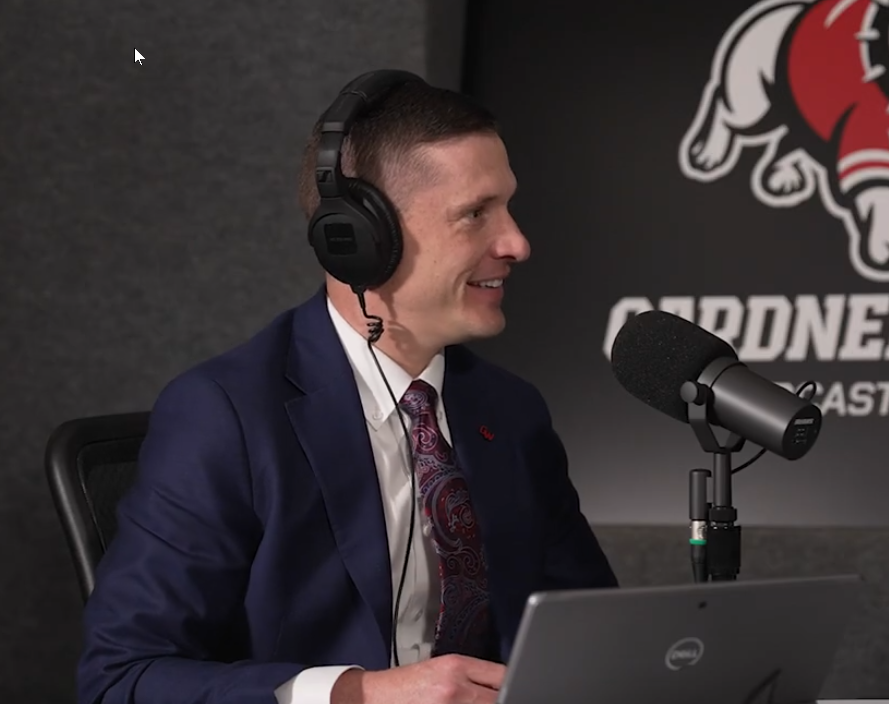
Podcast conversations give space for the person behind the office to show up. Several qualities stood out in this exchange.
First, humility about role and limits. He talks about surrounding himself with people who know their domains deeply and trusting their expertise. Not as a talking point but as a working habit.
Second, attention to people. He repeatedly returns to the human side of leadership. Sitting down with colleagues. Talking through issues. Being visible. Picking up trash after a game. Having coffee conversations. Removing distance where possible. Trust is built through transparency and presence, not position alone. I’ve had the chance to see this first hand, watching President Evans join other staff to help turn over space in a very short period of time in Tucker Student Center after the Honors Reception last Spring and prepare it for a Family Weekend event……
Third, clarity about values. He connects rigor, relevance, and rootedness when talking about academic experience. He connects faith, mission, and student formation when describing the distinctives of a Christian university. Whether a listener shares that faith perspective or not, the coherence of his framework is clear.
One Web as More Than a Slogan
We also discussed the “One Webb” phrase that he has utilized and circulated across campus. It started as a T-shirt idea during a time of uncertainty. It stuck because it named something real.
One Webb is about the unity of purpose across units that can easily become siloed. Academic Affairs. Athletics. Finance. Enrollment. Student Life. Advancement. Each has its own pressures and priorities. Without intentional integration, fragmentation is the default outcome.
The One Webb idea pushes against that drift. It frames the institution as one organism with a shared mission rather than competing divisions with separate agendas. In practice, that shows up in cross-unit conversations, shared planning, and cabinet culture that allows disagreement inside the room and unity outside it.
Unity is not sameness. It is alignment.
Looking Ahead at Gardner-Webb
With the interim label removed and a longer horizon in view, the focus shifts from reactive stabilization to intentional direction setting. Core values. Ten-year outlook. Strategic planning. Clearer definitions of who we are and how we measure progress.
He speaks about not leaving success to chance. That is a useful phrase. Many institutions drift into outcomes rather than design toward them. The work ahead involves defining targets, setting priorities, and aligning resources with mission and market reality.
There is also realism in his comments about change. Not every strategy will work. Not every initiative will succeed. Adjustment is part of responsible leadership. The key advantage he names for Gardner-Webb is nimbleness and a willingness among people to engage change rather than avoid it. That cultural trait matters more than any single tactic.
Why This Conversation Matters
Leadership in higher education often gets flattened into headlines and job titles. What is less visible is the daily work of holding a community steady, making imperfect decisions with incomplete information, and keeping students and mission at the center while conditions shift.
This episode offers a window into that work.
Not polished mythology. Not crisis theater. Just a grounded discussion about responsibility, uncertainty, people, and purpose at a university navigating a demanding moment.
The phrase that lingers is simple. Lead when the moment calls for it.
That is not just a description of one president’s year. It is a useful description of the kind of leadership higher education needs right now.