Accreditation, Innovation, and the Conversations We Need to Have
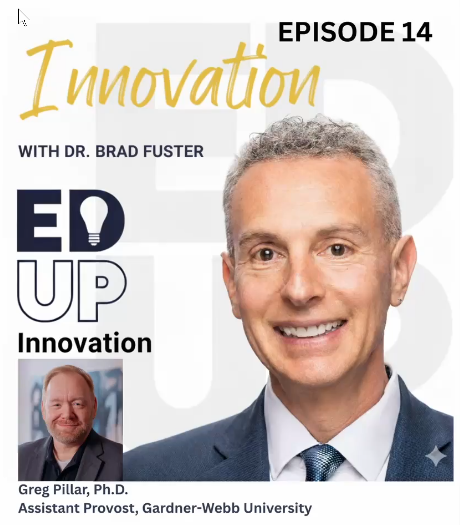
I recently had the opportunity to join Dr. Brad Fuster on the EdUp Innovation podcast for a wide-ranging conversation about accreditation, institutional change, and what real innovation in higher education actually looks like. I was especially honored to be included, given the range of leaders and innovators Brad brings onto his show. We are talking folks like Dr. Melik Khoury (President of Unitiy Environmental University), Dr. Brian Rosenberg (author of “Whatever It Is, I’m against It!” and former President of Malcaster University), Rebeka Mazzone (CEO of FutureEd Finance), and Ben Nelson (founder of Minerva Project and Minerva University) to name a few. The episode covered a lot of ground, but more importantly, it surfaced several tensions that many colleges and universities are quietly working through right now.
Accreditation is one of those topics that often gets framed as the obstacle. When a new idea stalls, when a program redesign slows down, when a new model runs into resistance, accreditation is frequently named as the reason. I understand why. I used to see it that way myself earlier in my career.
My perspective changed once I started working more directly in the accreditation liaison role and building actual working relationships with colleagues at other institutions and accreditor staff. What I learned is simple but important. Accreditation is not designed to prevent innovation. It is designed to ensure quality and accountability. Those are not the same thing. Often, we can get tangled and tripped by our own feet.
Standards are usually more flexible than people assume. The barrier is often not the rule itself, but how we interpret it (including how we operationalize the options/solutions) and/or whether we are willing to have an early, open conversation with the accreditor instead of making assumptions from a distance.
That theme showed up repeatedly in our discussion.
We talked about three-year and 90-credit bachelor’s degrees, which are gaining traction in several parts of the country. These models challenge long-held assumptions about seat time, credit hours, and how learning is measured. The real question is not whether 120 credits is sacred. The real question is whether student learning outcomes can be achieved in different, more efficient ways without sacrificing rigor. That is exactly the kind of question accreditors should be part of, not shut out of.
We also discussed microcredentials and alternative pathways. Right now, that space is still uneven and confusing for many students and employers. Greater quality signals and clearer frameworks would help. Thoughtful accreditor engagement could bring more consistency and trust to this area if done well.
AI was another major thread. Higher education’s response has been uneven. Some reactions have been fear-driven. Others have been overly enthusiastic. What I expect going forward is that accreditors will not dictate how AI is used in teaching, but they will expect institutions to be transparent, ethical, and intentional about how AI affects curriculum, student experience, and academic integrity. That is appropriate. Students and families deserve clarity about how these tools are shaping learning.
We also spent time on institutional closures, mergers, and financial stress. This is one area where I believe the sector still has work to do. When institutions close shortly after clean reviews, it raises hard questions about financial oversight and early warning signals. Those are not comfortable conversations, but they are necessary ones.
One point I tried to emphasize throughout the episode is this: accreditation works best as a relationship, not a transaction. When institutions treat accreditors only as auditors, communication narrows and fear increases. When institutions treat them as partners in quality assurance, more space for responsible innovation opens up.
Innovation and accountability are not opposing forces. They are supposed to work together.
If you are working in academic leadership, program design, policy, or accreditation, I think you will find the conversation useful. More than anything, I hope it encourages more direct dialogue and fewer hallway myths about what is or is not possible.
The pressures on higher education are real. So are the opportunities. The path forward will depend less on finding loopholes and more on asking better questions, earlier, with the right people at the table.
I am grateful to Brad for the invitation and the conversation. If you are not already, you need to check out the EdUp Experience Network. There are some fantastic podcasts from Dr. Fuster’s EdUp Innovation, to:
- EdUp Accreditation Insights (with Drs. Laurie Shanderson and Leamor Kahanov)
- EdUp Curriculum (with Nicole Poff)
- EdUp Closures, Mergers, and Acquisitions (with Dr. Jay Keehn)
- EdUp Campus Planning (with Chris Morett)
- This Week in College Viability (with Dr. Gary Stocker)
- Get Down to College Business (with Dr. Sarah Holtan)
- The EdUp Experience (the flagship with Dr. Joe Sallustio and Elvin Freytes)
There are so many more that I just haven’t had a chance to listen to and engage!.